“We need to bring more of our work into nature”
Working outdoors is more than a trend, it is a powerful way to boost creativity, reduce stress, and strengthen collaboration. That’s the view of Annika Widmark, facilitator, coach, stress educator, wellbeing guide and one of the founders of Ut&Insikter. With a background as an agile coach, she has seen firsthand how environment and movement can shift group dynamics and improve outcomes. We sat down with her to talk about nature’s role in working life, how to get started with outdoor meetings and why even the inner city offers more nature experiences than we think.
What inspired you to start Ut&Insikter, and what vision drives your work today?
I started Ut&Insikter together with my colleague Åsa because we wanted to bring more hands-on, reflective learning into organisations. We spent a lot of our own work time together outdoors with planning meetings, creative sessions and walk-and-talks, and we noticed how being in nature changed the way we worked. It sparked ideas, boosted energy, and helped us build trust. So we began taking our workshops and training sessions with participants outdoors too. Today, with our third colleague Anna on the team, we continue our vision to contribute to healthier, more sustainable and nature-connected workplaces.
In your experience, what changes do you see in people or groups when they step outside the office environment?
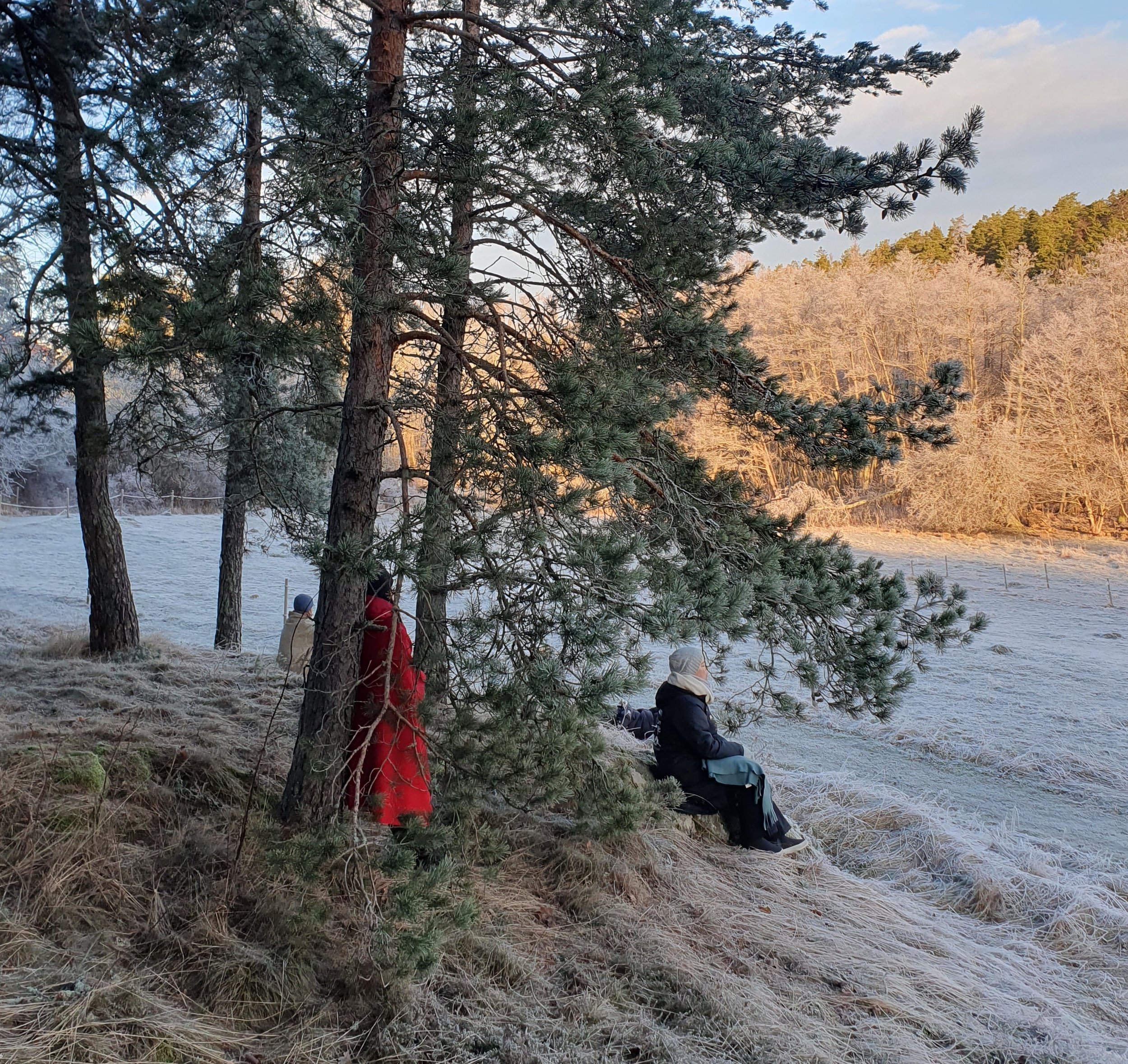
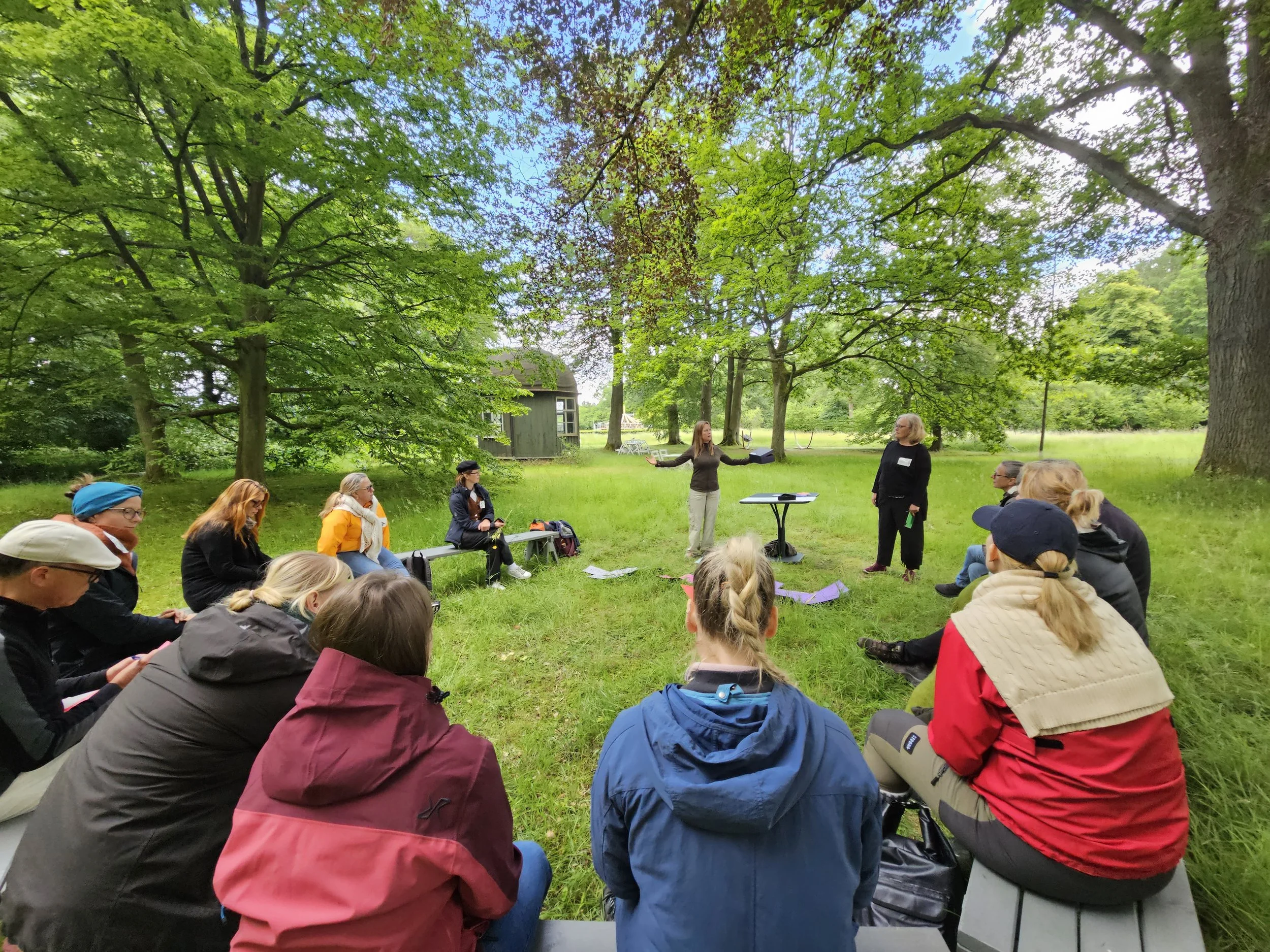
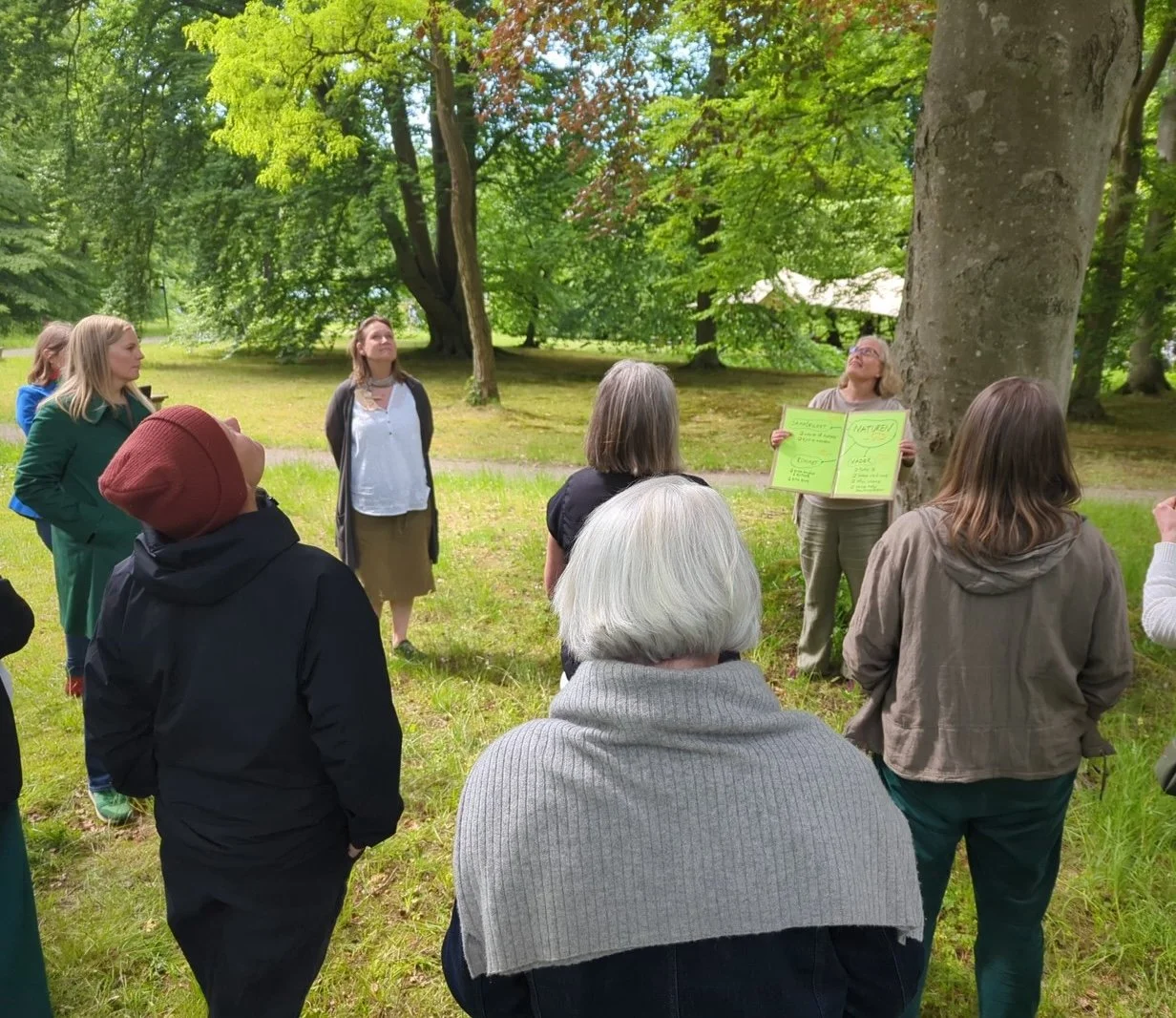
When we work with teams, whether it’s a work group or a leadership team, we take them outdoors away from their normal work environment. We experience first hand that “something happens” when we leave the office, but after collecting stories and feedback, a few clear patterns emerged.
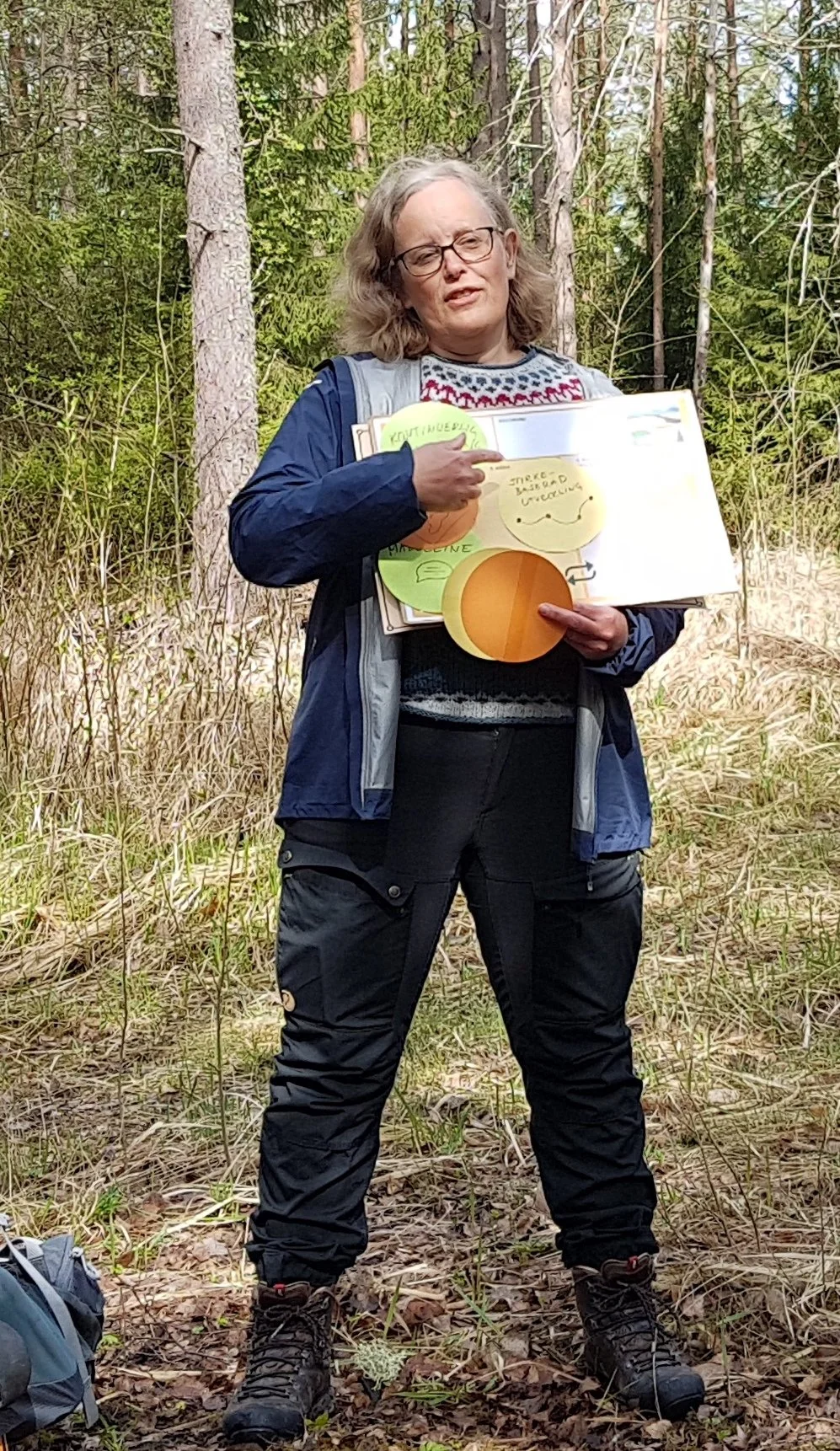
Annika Widmark
First, people become more creative. Stepping outside breaks the usual mindset and helps teams see problems from new perspectives. Even a short walk can spark ideas that never seem to appear around a meeting table.
Second, collaboration improves. Conversations shift outdoors - they become more open, honest and focused. The hierarchy of a conference room is challenged when you’re walking side by side, and that creates room for new dynamics and deeper dialogue.
And third, people simply feel better. You can literally see it, shoulders drop, the breathing slows down, the atmosphere lightens. Being outside gives both calm and renewed energy, and that benefits individual well-being as well as the work itself.
There are many ways to reduce stress and boost creativity, different things work for different people. But research clearly shows that nature can have a significant impact on both well-being and creative thinking. When we meet groups, we share some of these findings, but we also encourage people to experiment and discover what works for them: How can you connect with nature in your everyday life? Some benefits come almost automatically just from stepping outside like daylight, fresh air and movement that activates the brain. Other effects depend more on your emotional connection to the environment. That’s why there’s no one-size-fits-all approach. It’s something you need to explore yourself, or together with your colleagues, to understand what truly helps you.
“There are pockets of nature everywhere – even in central Stockholm”
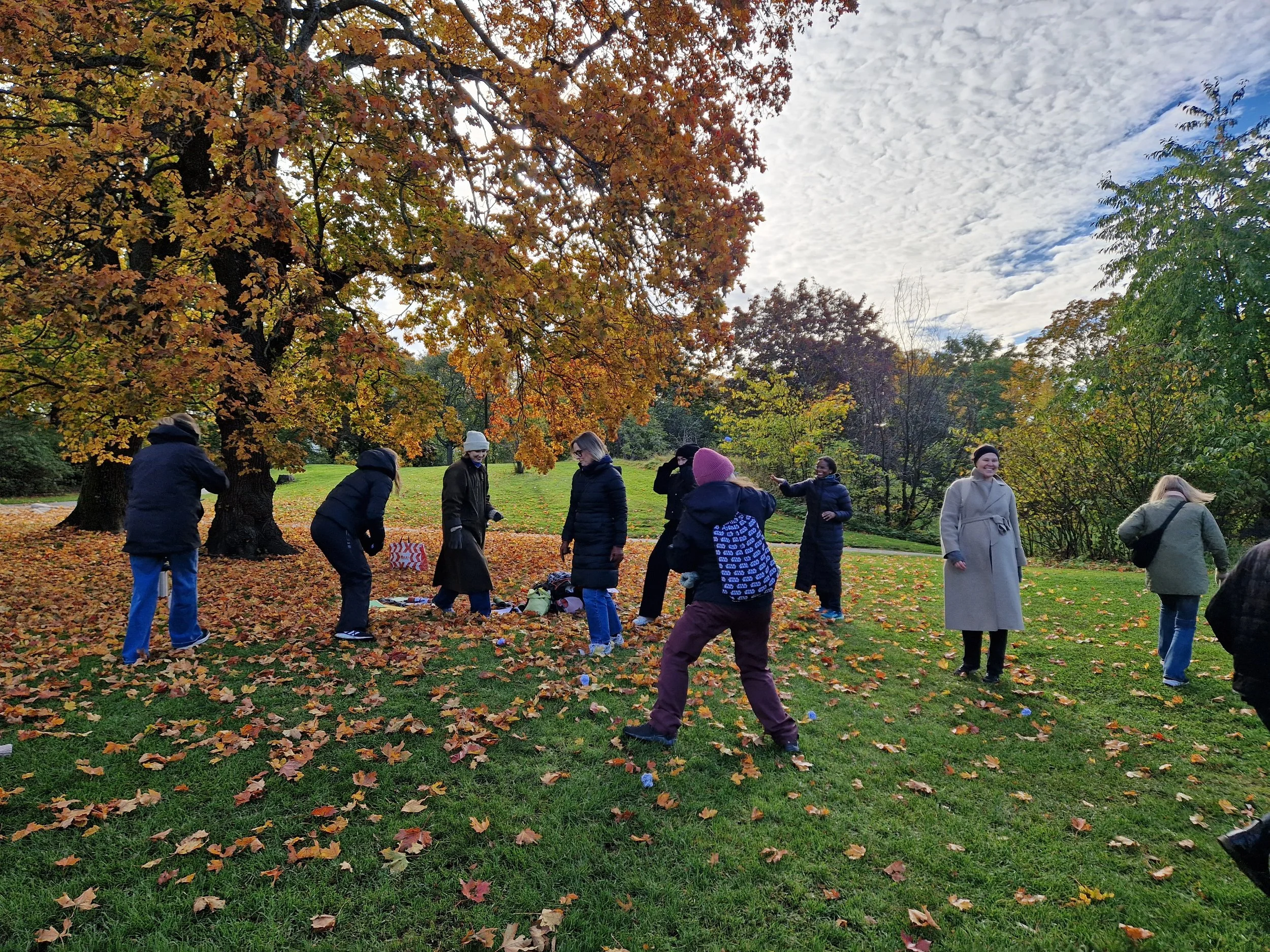
Annika explains that many people assume outdoor work requires forests or wilderness. But nature is often closer and more accessible than we imagine. “Sometimes it’s enough to turn your back to the traffic, look at the water and do a short reflection exercise – and you get a positive nature effect.” You often emphasize that nature is available even in urban environments — how can people find “micro nature” in cities?
This has always been important to us: showing that you can access the outdoors and even feel a sense of nature connectedness, even in a busy city. Every city has pockets of green - parks, trees, and, in places like my hometown Stockholm, plenty of water that offers a quick break from the noise. We encourage people and organisations to explore the surroundings of their workplace and identify their own “outdoor meeting rooms”, spots where you can sit and work alone or bring colleagues for a meeting or workshop. It’s also smart to create a simple map of routes for walking meetings. One client that we work with right in the middle of Stockholm has a big map on the wall next to the reception with recommended routes for walking meetings. That way, teams can easily choose paths with less traffic and a calmer atmosphere, making it more likely they’ll actually step outside.
You often work with a few methods - walking meetings, outdoor workshops and green nature breaks. Which method do you find people respond to most strongly, and why?
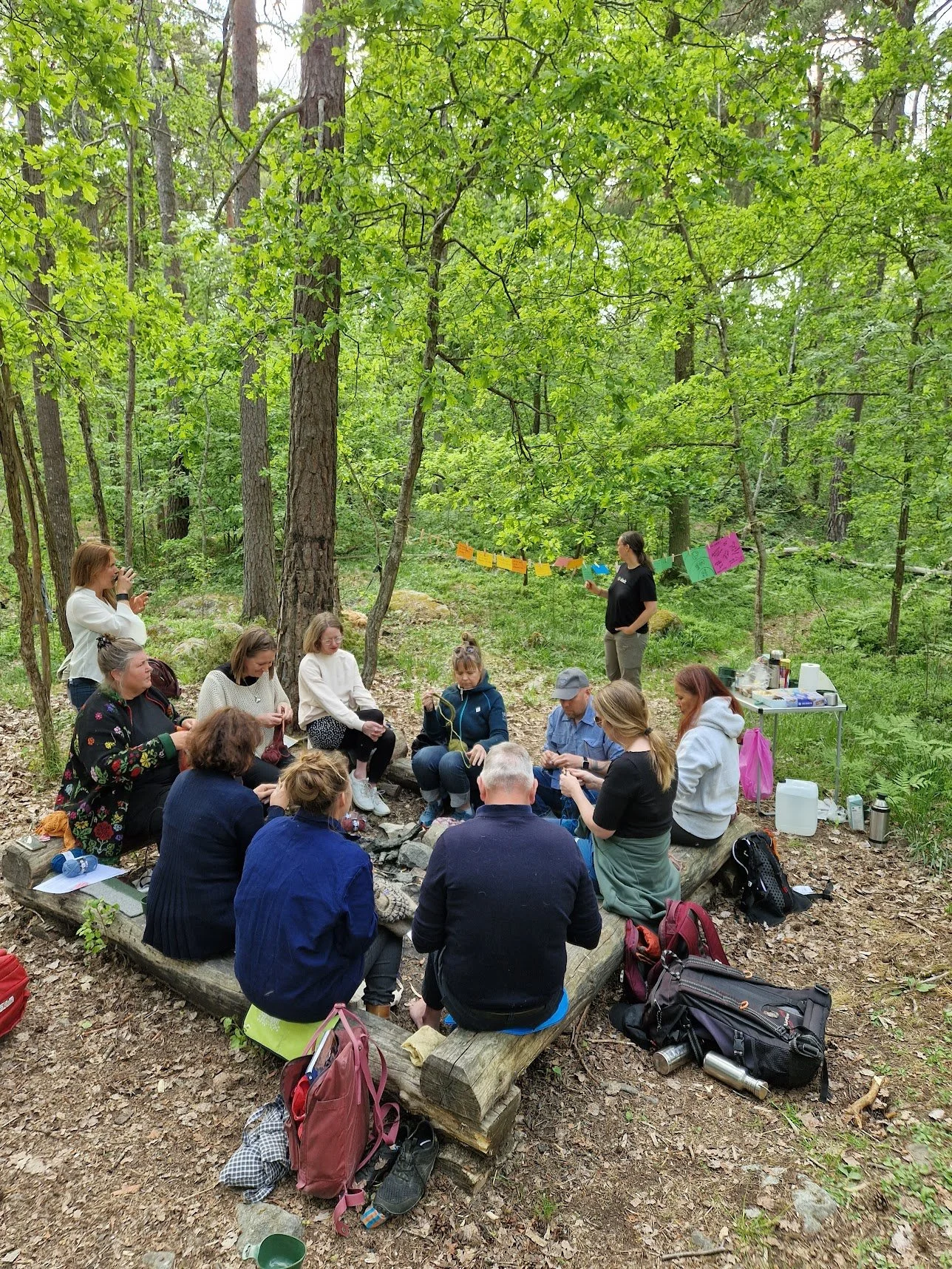
This is a bit difficult to answer, because people respond differently and each workshop or meeting has its own goals and prerequisites. Different methods serve different purposes, and we usually combine them to create the outcome we’re aiming for. Outdoor workshops are often the core format, and I use walking meetings throughout the workshop to deepen discussions or give space for reflection. Sometimes we use a walk-and-talk simply to “change rooms” in nature and let people think about the topic from a new angle or prepare for the next topic. Walking meetings are also a great way to add a short outdoor element to an indoor session, just letting people step outside for a moment to check in, reflect, discuss, spark new ideas or simply bring fresh energy back into the room.
And I always include short green nature breaks in every outdoor meeting. It might be just a minute to breathe, notice the surroundings, gaze at clouds or simply do nothing. It sounds small, but for many stressed people it’s the only true pause they get during a workday and it makes a big difference.
Can you share an example of a moment when a group experienced a breakthrough thanks to being outdoors?
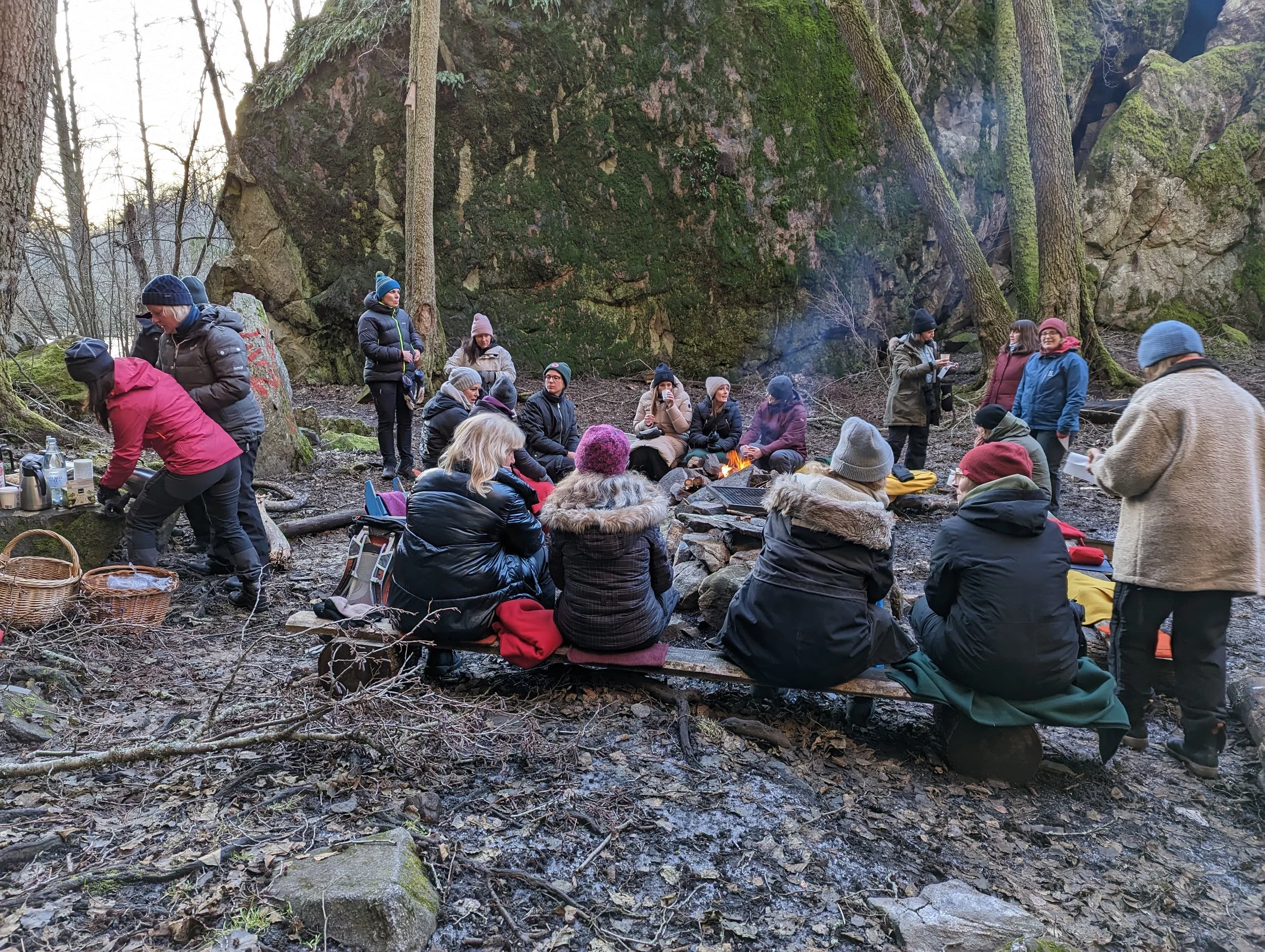
We’ve worked a lot with managers in the health care sector, and one moment that really stayed with me happened during a reflective workshop. We ended the afternoon gathered around a fireplace by the ocean, sharing stories and opening up in a way that rarely happens indoors. One of the managers had been quite reluctant to join, she was stressed, overloaded and felt she didn’t have time for this. But as we sat there, she said: “I didn’t know I needed this, but now I realise I really did.” Getting away, reflecting, sharing and feeling connected to others made a real difference for her.
She also realised that her own management teams needed the same experience. They were about to go through a reorganisation and facing significant challenges, and she felt certain that time outdoors together would help them have the open, honest conversations they needed. That insight eventually led to us facilitating three two-day off-sites with those teams - but that’s another story!
Are there common misconceptions about outdoor meetings or nature-based work?
I think many people associate outdoor meetings with physical team-building activities, which can make participants a bit skeptical or even anxious before they arrive. That’s why we make it very clear beforehand that we’re doing meaningful team work, using nature as a “meeting room” and a partner in the process. And we often start the workshop by saying “today we will not be climbing trees or creating human pyramids - we will sit, stand and walk in nature while reflecting, learning and discussing today’s topic”.
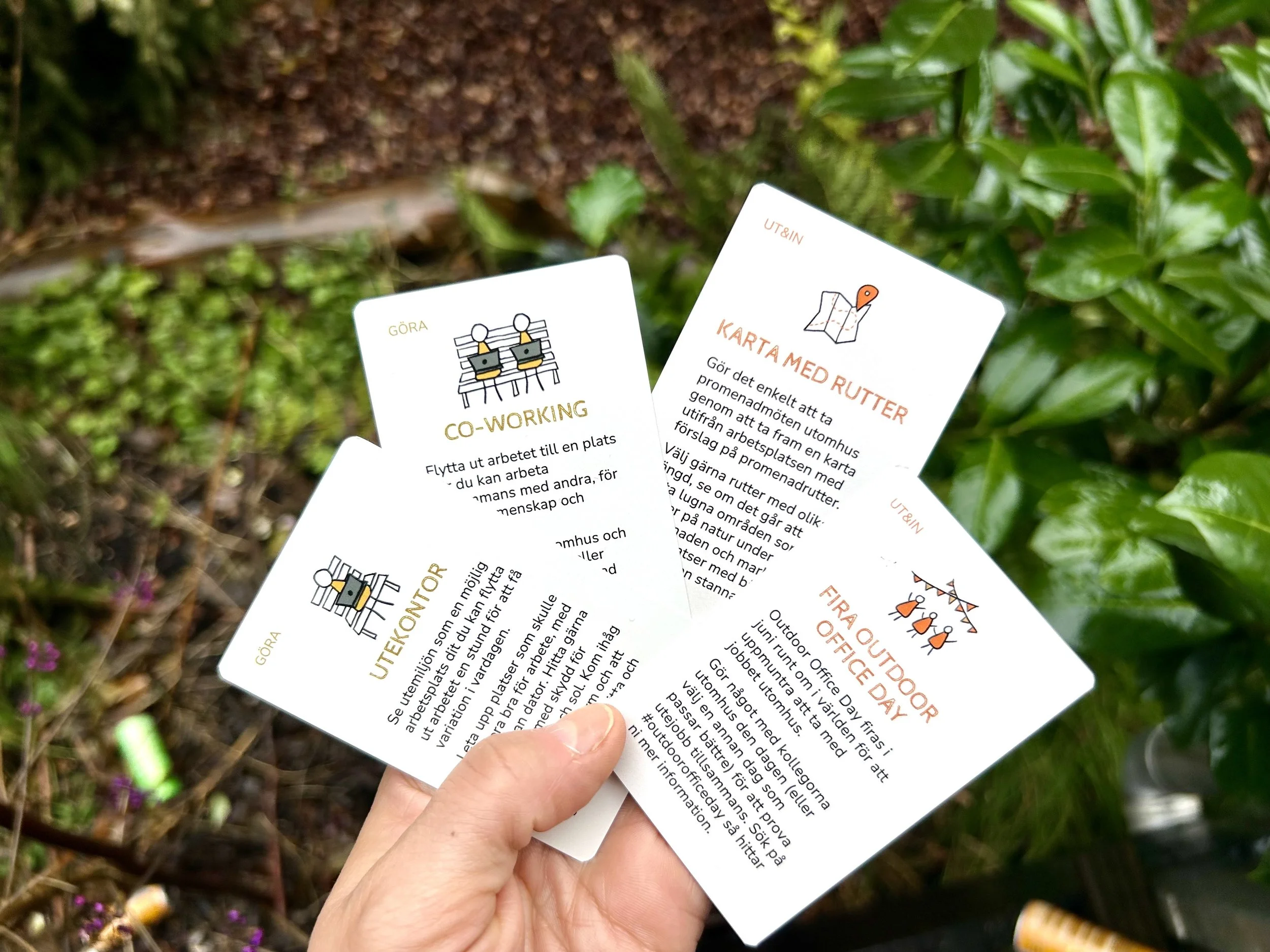
Another common misconception is the belief that “this isn’t really work, I should be in the office for it to count.” To challenge that, we work on shifting workplace norms. For example, we created a deck of cards called More Nature at Work with 52 tips for taking your work outdoors every day. One purpose of the deck is to remove misconceptions and show the many ways nature can support meaningful work.
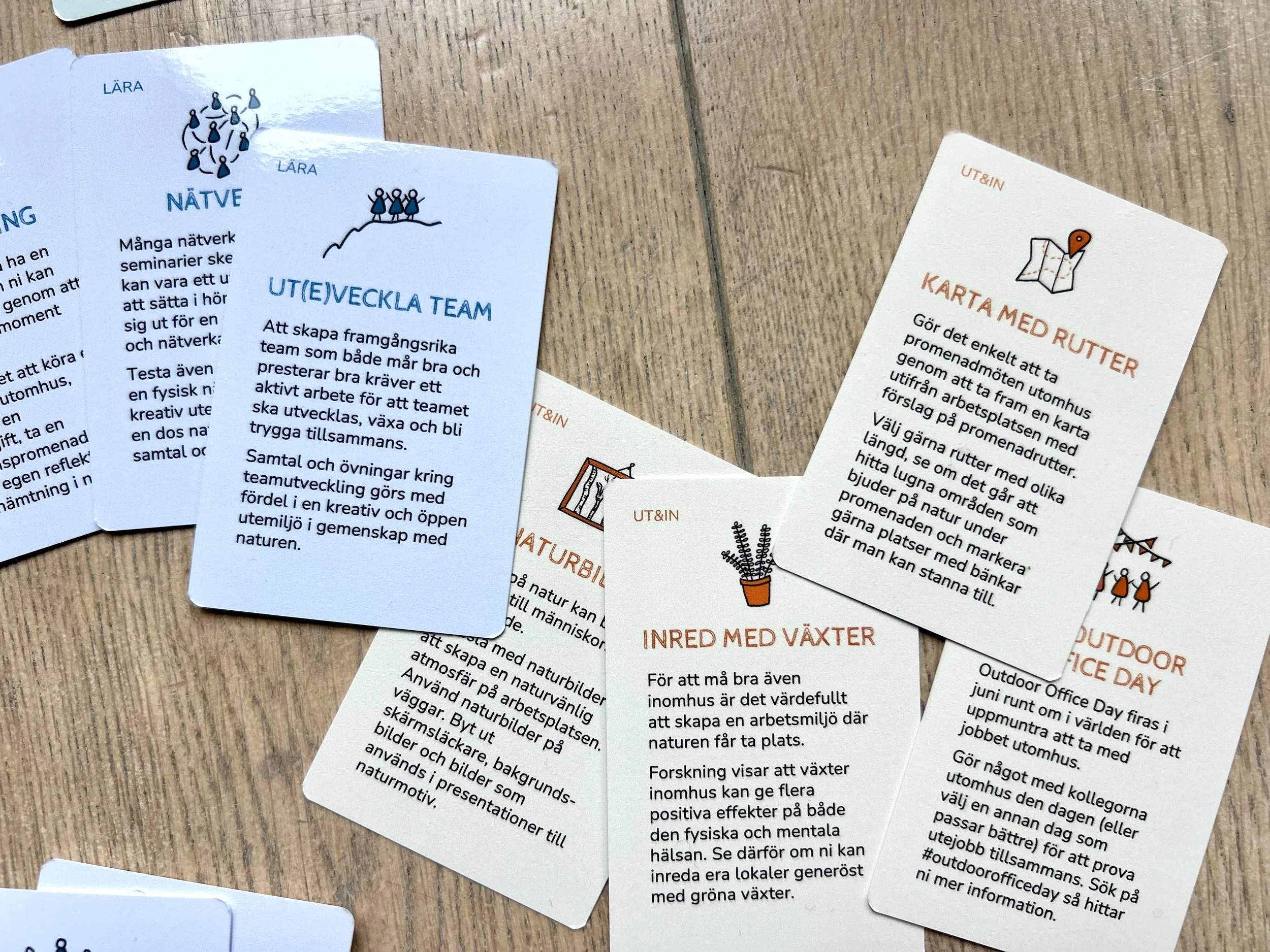

What advice would you give to someone who wants to start taking their meetings or workshops outside but feels unsure where to begin? And are there simple habits individuals can build into their workday to bring more nature into their routine?
One important starting point is to consider inclusion and accessibility. Indoor meetings come with familiar methods and expectations, but moving outdoors introduces both opportunities and challenges. Participants may have mental or physical limitations that need to be considered, and nature itself can present obstacles like challenging weather or noise. As a facilitator, it’s important to stay flexible and adapt to both the group and the surroundings. Beyond that, my advice is simple: just give it a try! The best way to learn what works, which places are suitable, and how groups respond is to start small and experiment.
For daily habits, I love the idea of a ‘daily dose of nature’. Research shows that just 120 minutes outdoors per week can support well-being. This is why we often challenge groups to create their own habits: “What is one thing I will do daily or weekly to get outside?” Sharing these habits with colleagues adds accountability and support, helping everyone remember to step outside during the day. They usually come up with things like:
“Take a walk during lunch”
“Stop and look at a tree on the way home after work”
“Open the window in the break room and breathe fresh air”
“Walk or cycle part of the commute instead of taking the subway or car”
“Do a few minutes of stretching or breathing exercise in the courtyard/roof terrace”
“Have walking one-on-one meetings instead of sitting in the office”
“Step outside for a short coffee break instead of staying at the desk”
How do you hope outdoor work practices will evolve in organisations over the coming years?
Over the coming years I hope the indoor norm will be challenged so that more workplaces not only allow but actively encourage moving work outdoors. I also hope that outdoor spaces connected to offices are designed with this in mind, making it easy to take even a short meeting outside. I would like to see a stronger connection between outdoor work practices and sustainability efforts within organisations. Right now, the focus for outdoor work is mostly on well-being, creativity and collaboration, which are of course important. But there’s a great opportunity to help people connect more with nature and bring it into everyday work life. Research shows that people who feel a sense of belonging to nature are more likely to engage with issues like biodiversity and climate action. If we can link our work outdoors with the broader sustainability movement, I believe we can create an even bigger impact.
Is there a project, idea, or direction you are excited to explore next with Ut&Insikter?
Exploring the connection between what we do and the sustainability movement is an important direction we want to continue. We strive to learn more, build networks, find passionate people to be inspired by, and keep spreading the message within our communities. In the coming year, we will continue running workshops and supporting individuals, teams, and organisations in moving outdoors to boost well-being and results. We also want to focus more on the ‘train-the-trainer’ concept. Over the years, we’ve learned a lot that we want to share with for example facilitators, managers, HR staff, and educators, helping them improve the skills needed to take their meetings, workshops, and training sessions outdoors. Sharing our know-how with this audience feels both important and incredibly rewarding.
Our goal is always to contribute, to inspire change, and to make sure we have fun while doing it.
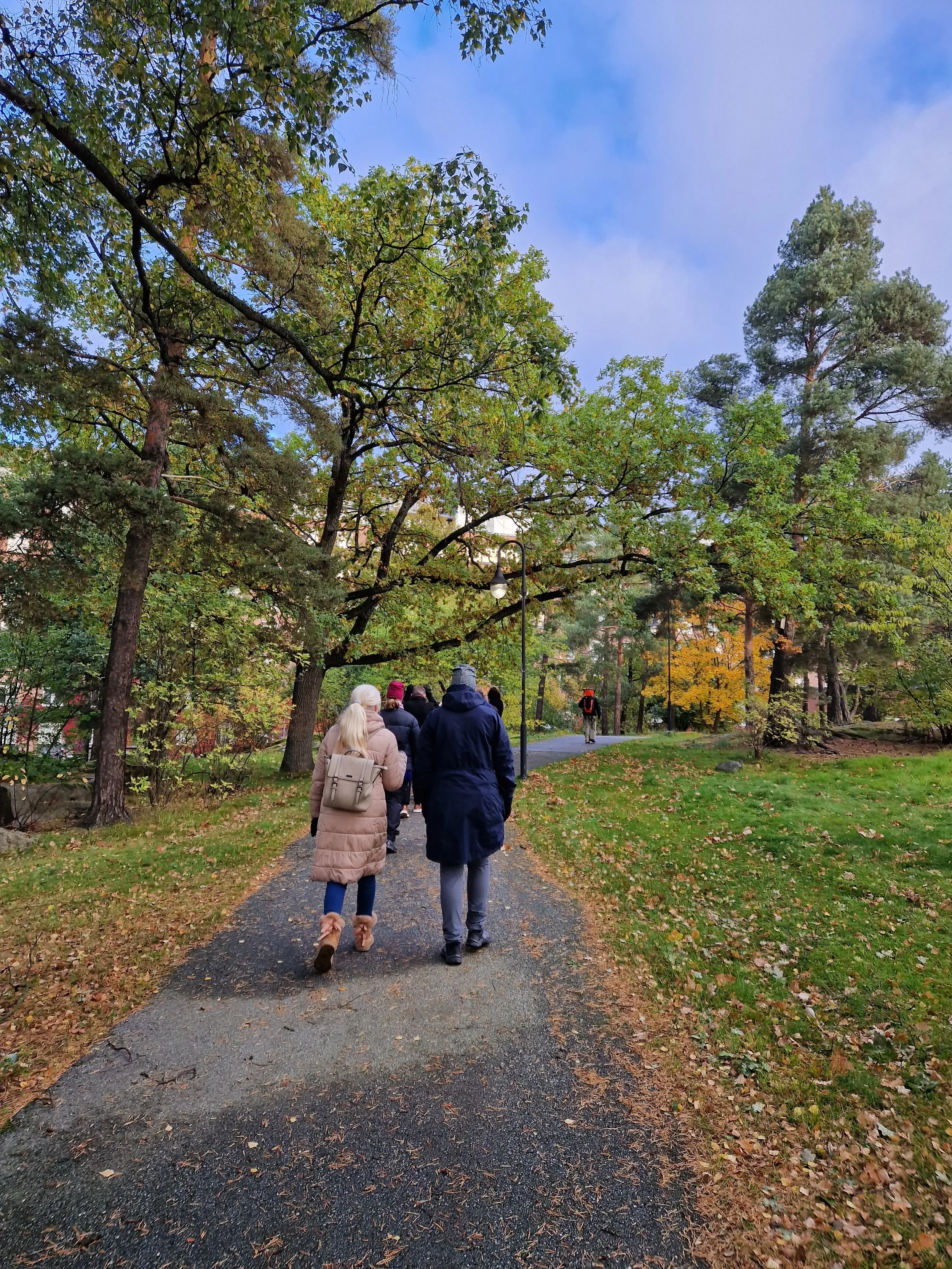
Walking meeting / Ut&Insikter