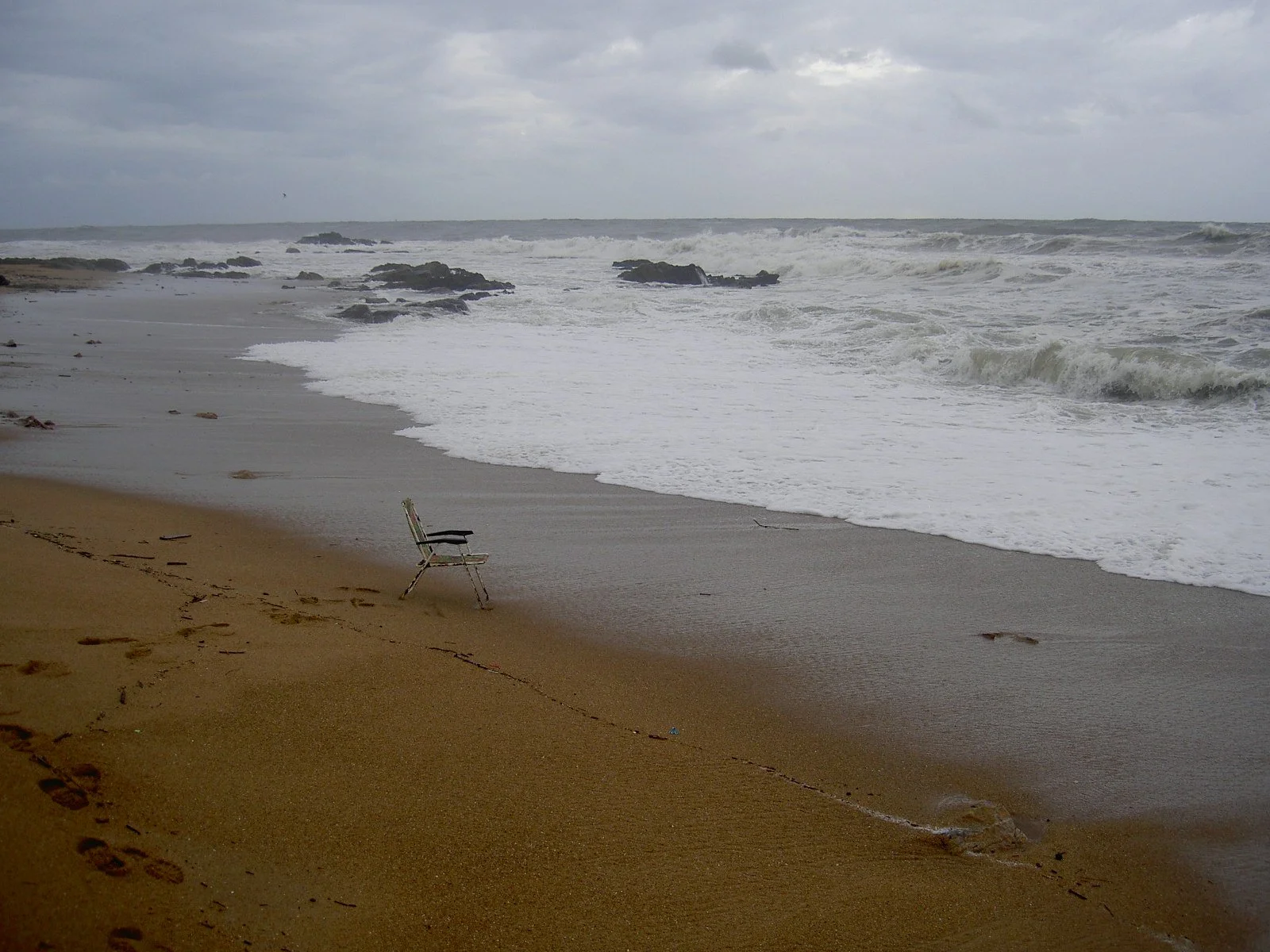
FEEL. SOMETHING. REAL.

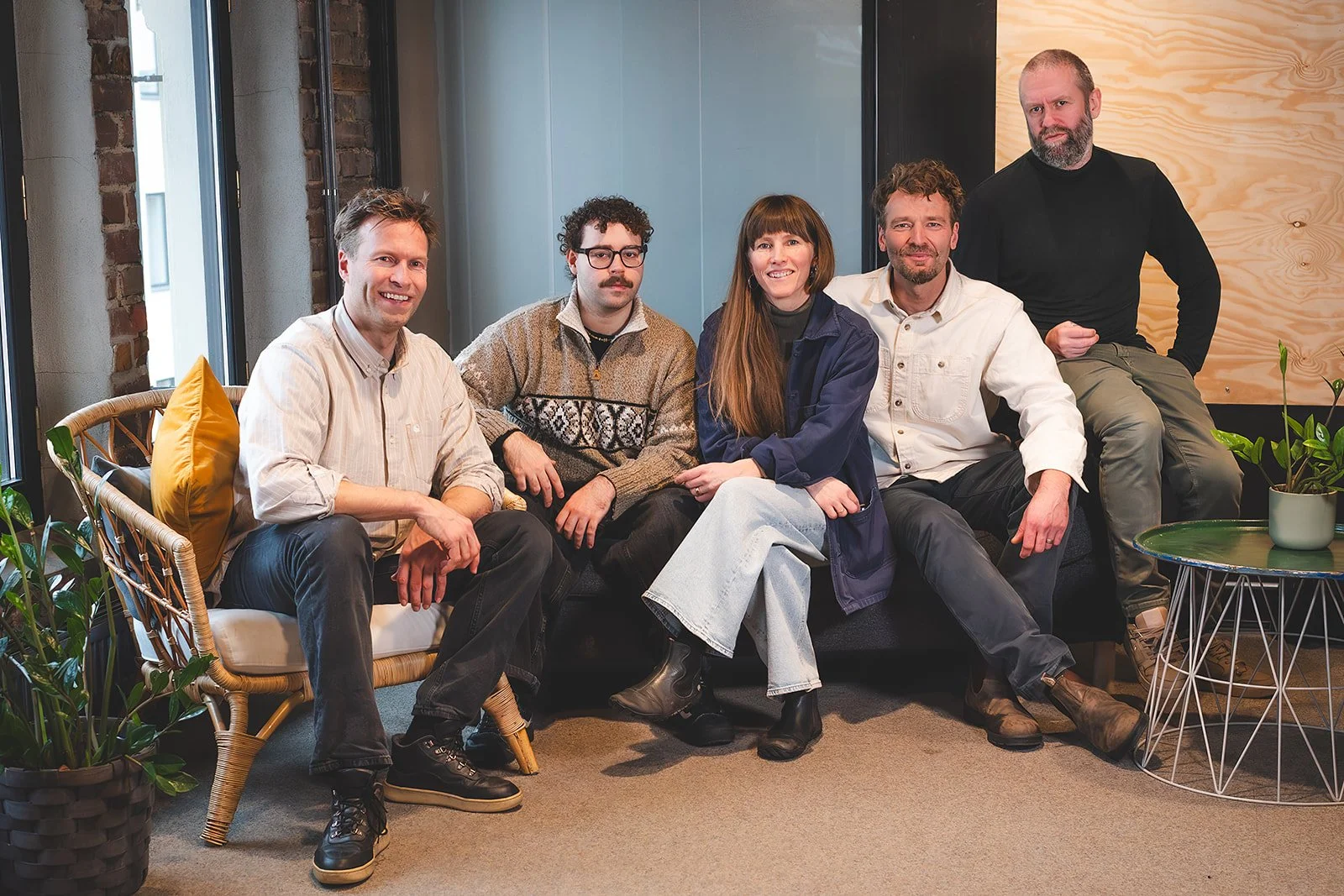
Outspaces isn’t your average communications agency, it's more like a determined movement run by Jonathan Eidse and Johanna Frænkel and an extended family of collaborators they proudly describe as Solar Punks. Read that as people who believe the future can be bright, green, human, creative, and who are already busy making it happen. Outspaces uses storytelling to make sustainability brands or leaders not only heard, but also felt. They help NGOs, outdoor brands, nature travel initiatives, and green-tech changemakers share stories that make people pause, smile, question things, change, or head outside for clarity. And with a payoff like ‘FEEL. SOMETHING. REAL.’, you know they’re here to shake sustainability communication.

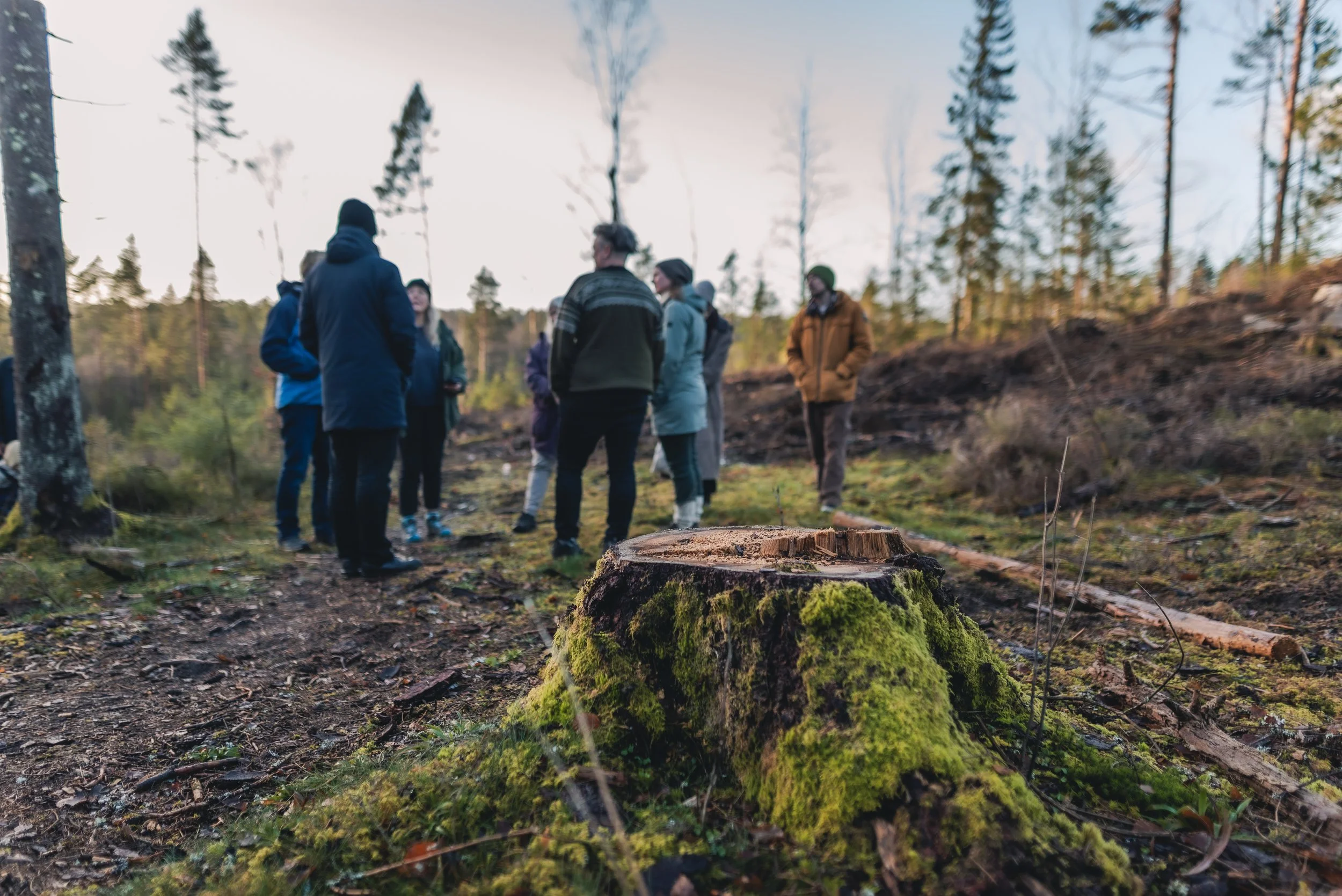
Images: Outspaces

Your team blends outdoor culture, sustainability storytelling, and what you lovingly call your “solar punk extended family.” How does your motto “FEEL. SOMETHING. REAL.” capture that spirit and what kind of communication world are you trying to build with it?

Good question! Our motto was established around five years ago, when greenwashing was still running amok. Sneaky marketing took full advantage of rising consumer concern for the environment, stealing sales from those actually doing the hard work. There was understandably a lot of skepticism to any sustainability claims as a result. This was communication at its worst. Communication at its best, on the other hand, boils down to establishing a relationship of mutual respect and trust. At Outspaces, we apply this principle not only to the audiences we communicate with, but to our clients and partners as well. This is how we try to keep it “real.”

Fortunately, greenwashing has subsided somewhat since those early days. But it’s still out there. We’ve found a very effective workaround to it, however: work only with the best. Take our client Patagonia, for example, an unquestionable leader in their field. What this means is that when we do outreach on their behalf, we are earnest fans of their work. We don’t need to swallow any camels just to get paid – we simply need to communicate their true stories in a way that also serves the audience’s best interests. The same goes for our partners, like NORR Agency and OutVision. We make sure they’re the type of people we don’t hesitate to invite for a family dinner. The moment we stopped focusing on improving revenue and instead on improving our relationships – we all had much more fun. And guess what? Better relationships lead to more projects which lead to more revenue anyway. No sneaky tricks or sleight-of-hand necessary when you’re working with the right people.

Sustainability can often feel abstract or far away. Why is communication such a powerful tool in this field, and how do you make sure your work stays grounded in real people and real places?

I think that sustainability’s abstractness is more of an issue for those who have grown up under the “perpetual growth” narrative, rather than it being a problem with the concept itself. When virtually no aspects of the modern lifestyle fall within the limitations of our planetary boundaries, visualizing sustainability takes a leap of the imagination.

And when it comes to communicating sustainability issues to this audience, the stakes are very high. Done in the wrong way, the audience becomes paralyzed and anxious. But done in the right way, they become empowered and emboldened. One of the productions we work with together with our partners at NORR Agency is Suston Magazine – Sustainability Outdoor News. It uses what’s known as “solutions journalism” to connect the reader with actionable solutions, assuming that they are already well-aware of the problems from other media. I can’t emphasize enough the need to focus on actions readers can actually take, here and now. There is a hunger for this kind of information that is rarely getting fed.

You work across outdoors, nature travel, green tech, NGOs, public sector… These fields seem wildly different on the surface. What’s the secret thread they all share when it comes to storytelling?

Good observation! I’ve often felt that we have a bit of a long elevator pitch... You could say that these reflect the personal passions and expertise of the team. But I also see a red thread is that we are drawn to social and environmental innovations – projects that are breaking new ground. These often have complex stories that are just begging to be retold in a clear, engaging manner. A challenge we most happily accept.

If you had to give one guiding principle for how to communicate sustainability what would it be?

Just one? Then this would have to be the same guiding principle as with all writing: know your audience and adapt your message accordingly. This can be a mix of solid demographic data and finger-in-the-wind guesswork. But the bottom line is that there needs to be a strong answer to the reader who asks “what’s in it for me?”

Nature as your personal colleague and  collaborator

Coming from outdoor office movement, we are curious to hear about your personal outdoor connection. How often does being outdoors shape the way you work?  Or how does your own relationship with the outdoors keep your creative batteries charged?

Several of us at Outspaces have professional backgrounds in the outdoors: Johanna Fraenkel as a horse guide and ski instructor, Andreas Wiig as a snowboarding world champion. I too began my career as a mountain guide, so the outdoors was my workplace. But as my joints began to wear out, I went back to school and opted for a comfy desk job. It didn’t take me long to figure out that sitting absolutely still for 8 hours a day is even worse for one’s health… I soon found myself peering out my office window with longing as the sun rose and set on yet another day.

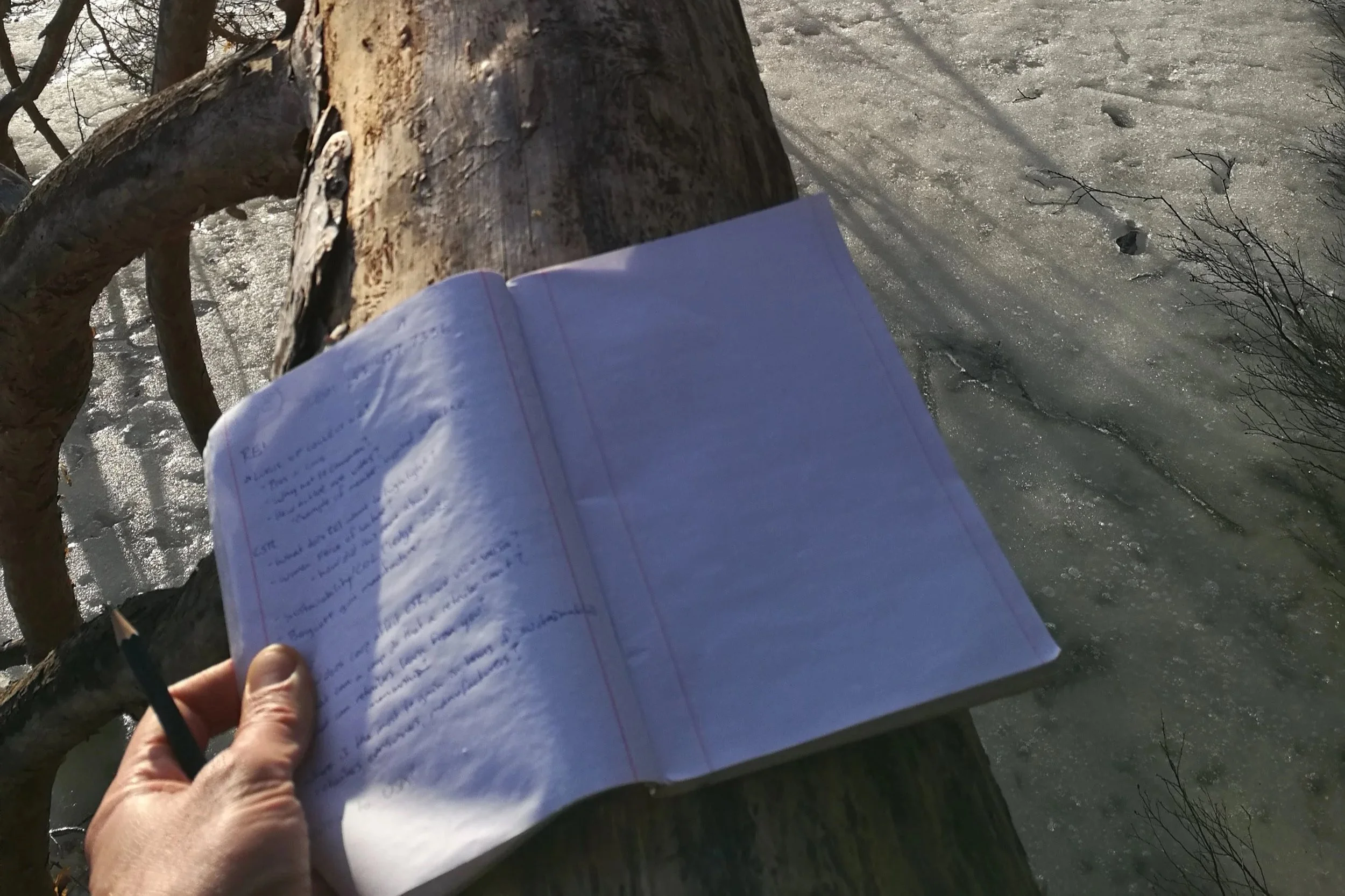
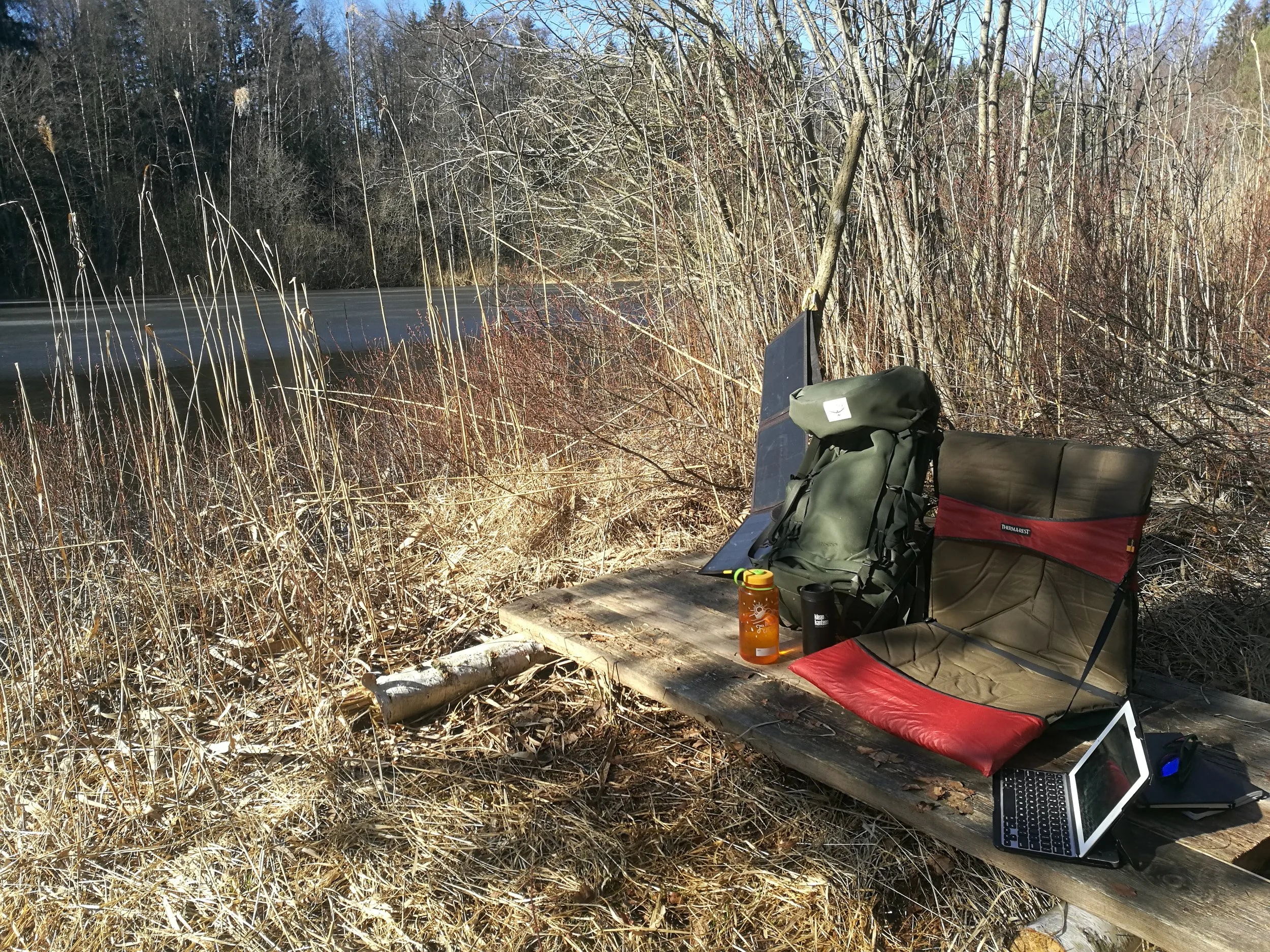
But I have the good fortune to live in Oslo, which has an abundance of extremely accessible nature. So, I began hiking or cycling to various beautiful locations on sunny days, working from a hammock and taking a swim in the fjord whenever I needed a boost. In the winter, I began bringing my laptop to a cabin serving waffles and coffee just a short x-country ski trip from the subway stop. Fall and Spring, I found an indoor rock climbing gym with a quiet spot to take Teams meetings or respond to emails between workouts.

I’ll usually try to take a friend or colleague, but I’m OK going solo as well. And of course, this is only once a week! Otherwise, I enjoy the productivity benefits of a proper office as well as the social scene. I know that this is a privilege that not everybody is able to do, but I think that the possibility doesn’t even occur to most people. The creativity and deep satisfaction that this unleashes in me is hard to describe to somebody who hasn’t tried it.

Looking ahead, what future plans or ambitions excite you most for Outspaces? Is there a dream project, collaboration, or direction you hope to explore next?

We look forward to building upon the relationships with current partners first and foremost – we acknowledge that we’re a very, very small fish in a big ocean, and that it’s by working together that we have the greatest impact. We’re also pushing in directions that blur the lines between business and activism, connecting with local NGOs and community groups, looking to find ways of supporting their projects. Becoming a company that strikes the right balance between paid and impact work - taking on high-integrity assignments and giving back a portion of our time or profits to causes we believe in – this is the height of our ambition.

website
linkedin
Previous
Previous

Rebel with a Pause.

Next
Next

“We need to bring more of our work into nature”