Placemaking for Safety and Connection: Centrum för AMP
In Swedish cities, there's a quiet transformation happening in public squares, outdoor plazas, and community gathering spaces. It's not about grand architecture or monumental change. Instead, it's rooted in something simpler and far more powerful: creating the conditions where people want to be. Centrum för AMP is a purpose-driven nonprofit organization founded in 2019 by business associations and major property companies to develop a Swedish model for activating public spaces that increases safety and attractiveness. Their approach, the AMP-models (Affärs- och Medborgarplatsmodellen) - or Business and Citizen Place Model - is elegantly straightforward: a safe and welcoming place is one where both commercial activity and human presence thrive together.
Their two anchoring locations - Forumtorget in Uppsala and Jan Stenbecks Torg in Kista - operate year-round with staffed presence six days a week, hosting over 250 activities and events annually. But beyond the numbers lies something more essential: a vision of wellbeing, connection, and authentic community emerging naturally when places are thoughtfully activated and cared for. What makes Centrum för AMP distinctive is their commitment to evidence-based practice. They measure, evaluate, and learn from every initiative, then share those learnings through their Knowledge Center. It's a model that proves working outdoors and being in active public spaces doesn't just improve safety; it transforms how people connect, work, and envision their role in shared community life. Last year, Centrum för AMP stepped into a new realm by hosting Outdoor Office Day events at two of their locations. We spoke with them about those experiences, what they learned, and how outdoor working culture fits into their broader vision of regenerative public space.
Your mission centers on making public spaces safer and more welcoming through the AMP model. How do you see the connection between wellbeing, genuine community connection, and the physical activation of public spaces? What makes a place feel alive?
By activating public spaces, both with activities, events and physical installation such as furniture, games and greenery, we create places that make you feel welcome. On top of that our staff hosts activities that bring people together and invite people into the community on the squares. Once people starts to feel at home at our squares, they start to visit more, which means they start to recognise our staff and other people of the community and starts to feel a kind of belonging and ownership in the public space. So, it's the combination of a nice place, our hosts and the offering of a wide range of activities that attract different kinds of people, that makes the public spaces feel alive.
We just had a project aiming at reducing involuntary loneliness at Forumtorget in Uppsala. Over 600 persons participated and in the survey 98 % stated that they felt a stronger sense of community after they participated. That is a great example of how activated public spaces can contribute to wellbeing.
De methodology use by you emphasizes presence, care, and cultural activation, programming activities and events, involving local organizations. How do these tools translate into actual regeneration? What do you mean by making a place "regenerative" versus just "activated"?
Regeneration is when people start taking their own initiatives in public spaces. On a structural level, we collaborate with over 70 organisations, where we provide permissions, technical equipment, and infrastructure, while they produce the content. In the beginning, we were the ones initiating most collaborations, but now organisations reach out to us because they see our squares as arenas they want to contribute to.
Philippa Staffas: “my favourite stories of regeneration are more on a human level. For example, we have an art month in Uppsala. The effect of this is that many artists want to exhibit their work in the square, which has led to several art weekends during the spring. One artist even asked to decorate our office window, so her work is now permanently displayed at Forumtorget. Another story is the one about the missing curling stone in Kista. We were quite frustrated when someone stole the stone, since it is both expensive and difficult to replace. But two months later, the stone was returned. We don’t know who took it, where it had been, or who brought it back. But it is a great example of how people start to get involved and give back when they appreciate something.”
Could you highlight a connection project or initiative you've led that really exemplifies the impact of your work? Something where you saw genuine transformation in how people relate to each other and to the space?
I think the project aimed at reducing involuntary loneliness is a strong example, but I would also like to highlight a project with an outcome we could never have imagined. In one of our pilotplaces, which has now ended, we had a public piano. As expected, we had many children banging on the keys, but we were also surprised to discover how many talented piano players were in the area. After a while, something almost magical started to happen. We saw strangers begin to play together, one man took on the responsibility of maintaining and tuning the piano, and one day three teenage girls came from the other side of town—30 minutes away—because they had heard about the piano.
I think this is a very simple idea with a powerful impact. The piano brought people together, created a sense of ownership and belonging, and gave the place a clear identity. All with just a piano!
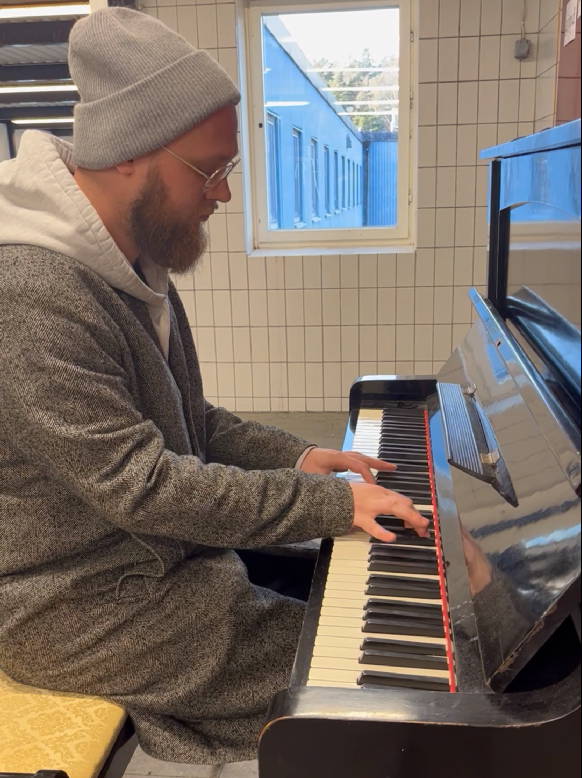
The piano in Haninge, Stockholm. All images: courtesy of Centrum för AMP
Forumtorget in Uppsala and Stenbecks Torg in Kista were Outdoor Office Day centers. Can you walk us through what those days looked like? How did that experience shift your thinking about how workplaces, public space, and community engagement connect?
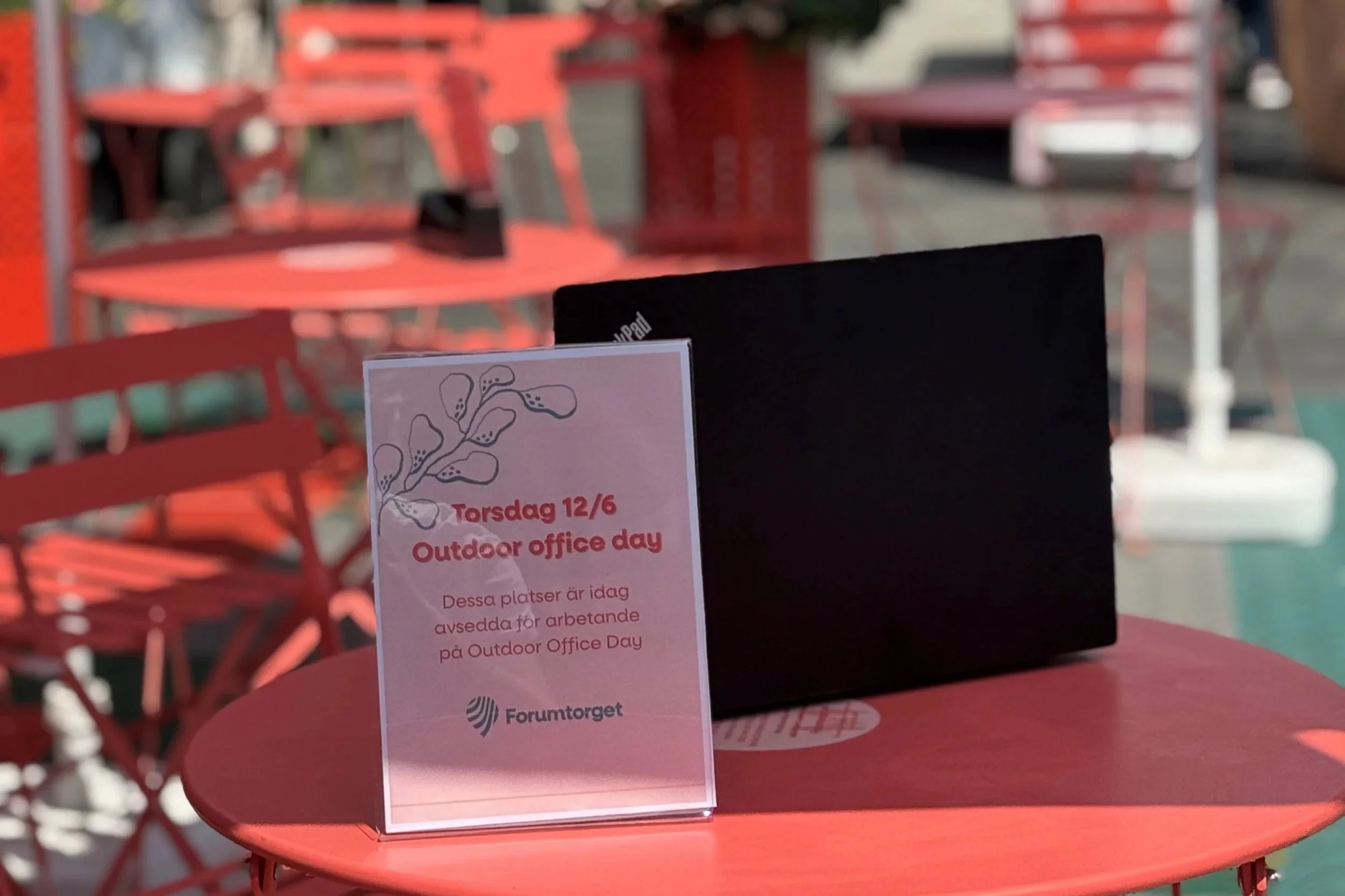
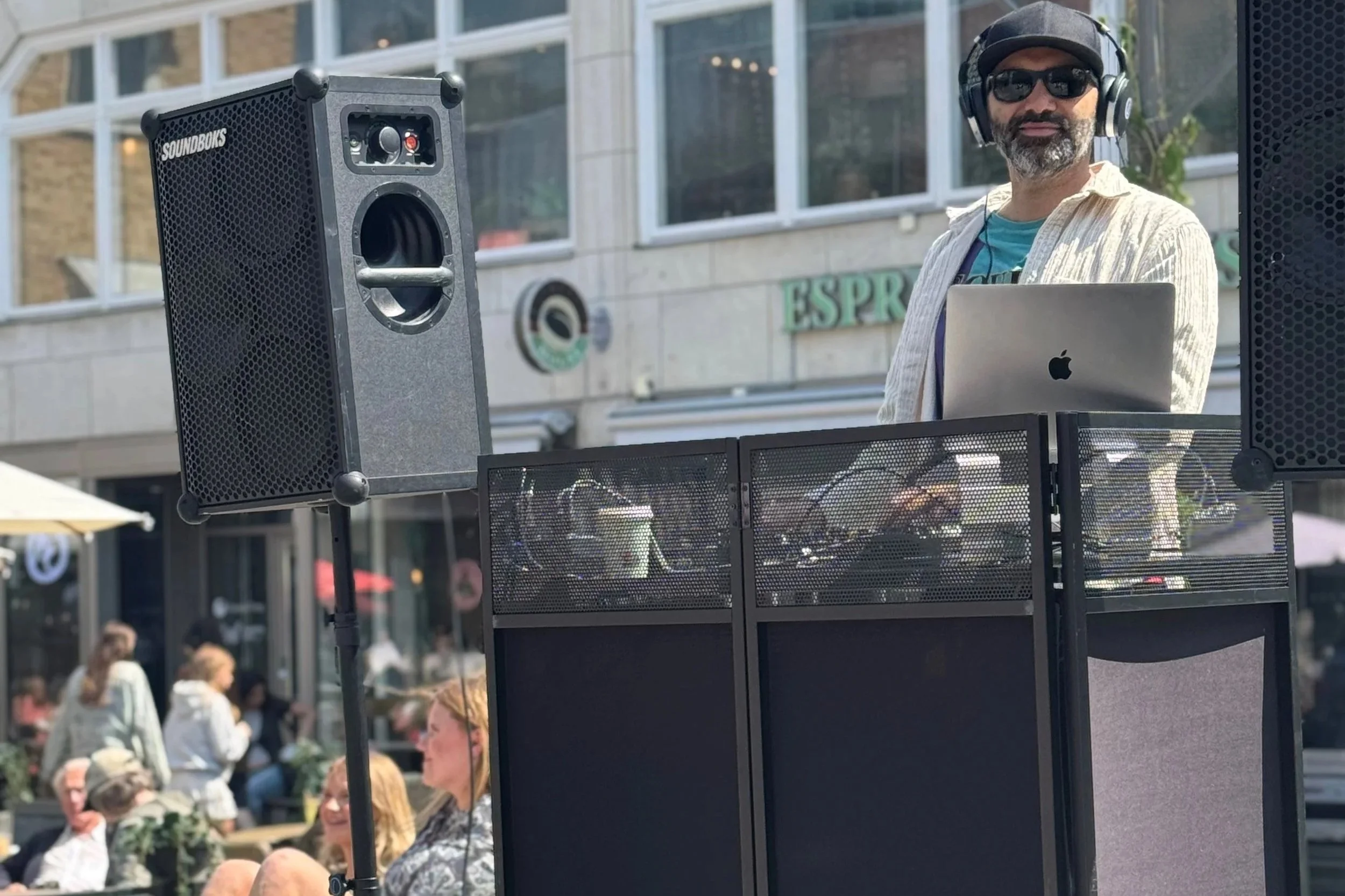
At Jan Stenbecks Torg in Kista, Outdoor Office Day was the kickoff for introducing the square as a place where people from different companies could come together. Kista is often referred to as the Silicon Valley of Sweden, so there are many tech companies in the area. In both Uppsala and Kista, we offered free coffee, free Wi-Fi, and a variety of seating options. During lunch, there was live music in both squares.
Uppsala does not have a lot of office space around the square, so the impact there was relatively small. However, in Kista we really started to establish a meeting place for tech workers. During the summer, the square has been packed with people, especially at lunchtime, we even had to buy 60 additional chairs. We also saw people from different companies sharing tables, with colleagues eating together even when some had lunch boxes and others bought food from the nearby mall. Since it was the first summer in Kista, we did not yet fully know the community. But by inviting people who work in the area, we could see how they connect with locals and how they share both the physical space and the experience of the square.
What's on the horizon for Centrum för AMP?
We are looking forward to the summer! As we activate our squares all year round, we are now leaving the more challenging seasons behind and can offer a greater variety of activities during the warmer months.
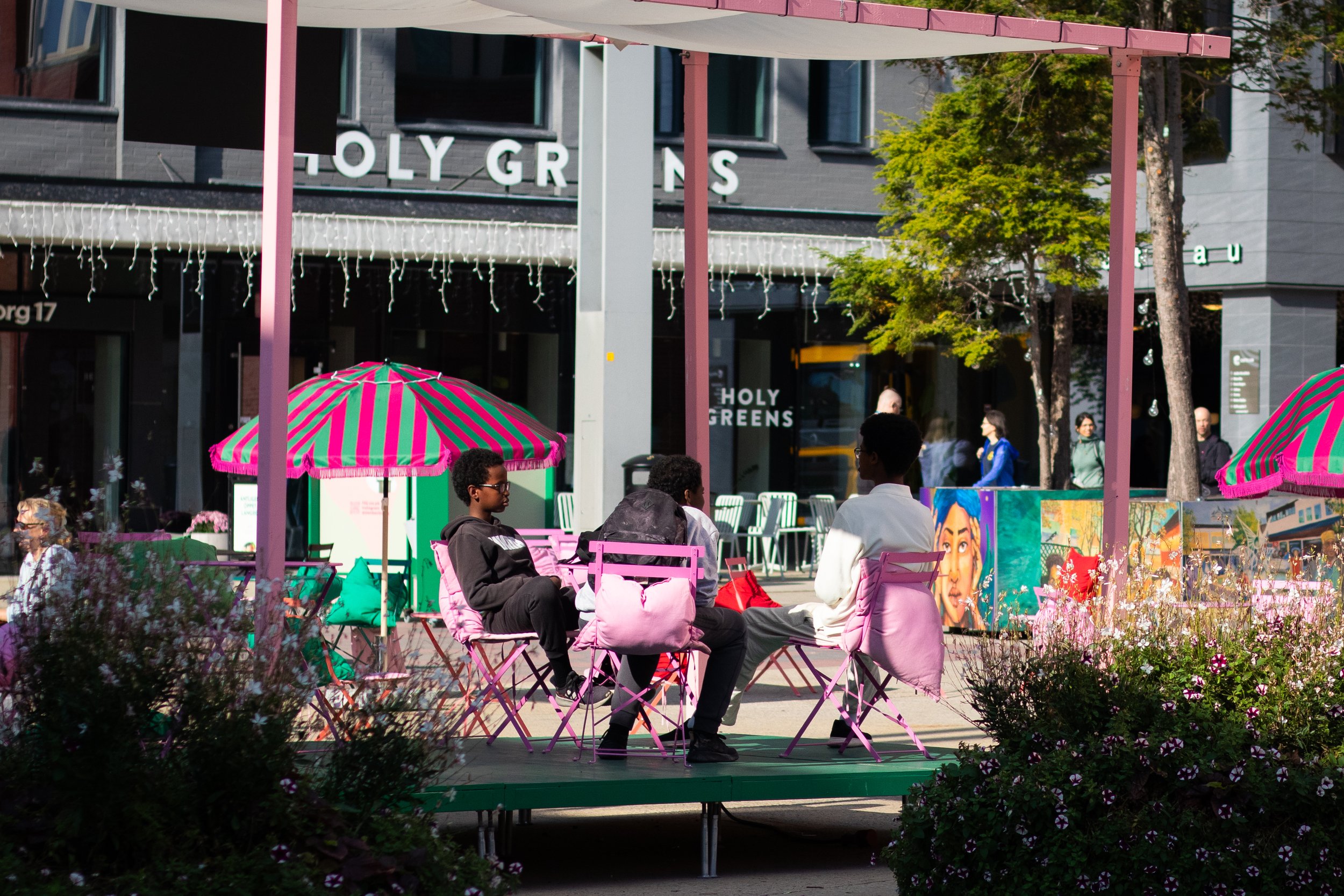
Jan Stenbecks torg in Kista